
Analysis of 588 Covid-19 SmallRNA seq samples were done using in-house developed methods and algorithms. Expression analysis was carried out against NepSeq database to find the difference in covid infected human and non-infected humans. 261 small RNAseq were exclusively present in genes of Covid-19 samples. Upon pathway analysis, we found substances which may be used to treat Covid-19.
A: Arginine and Proline metabolism pathway
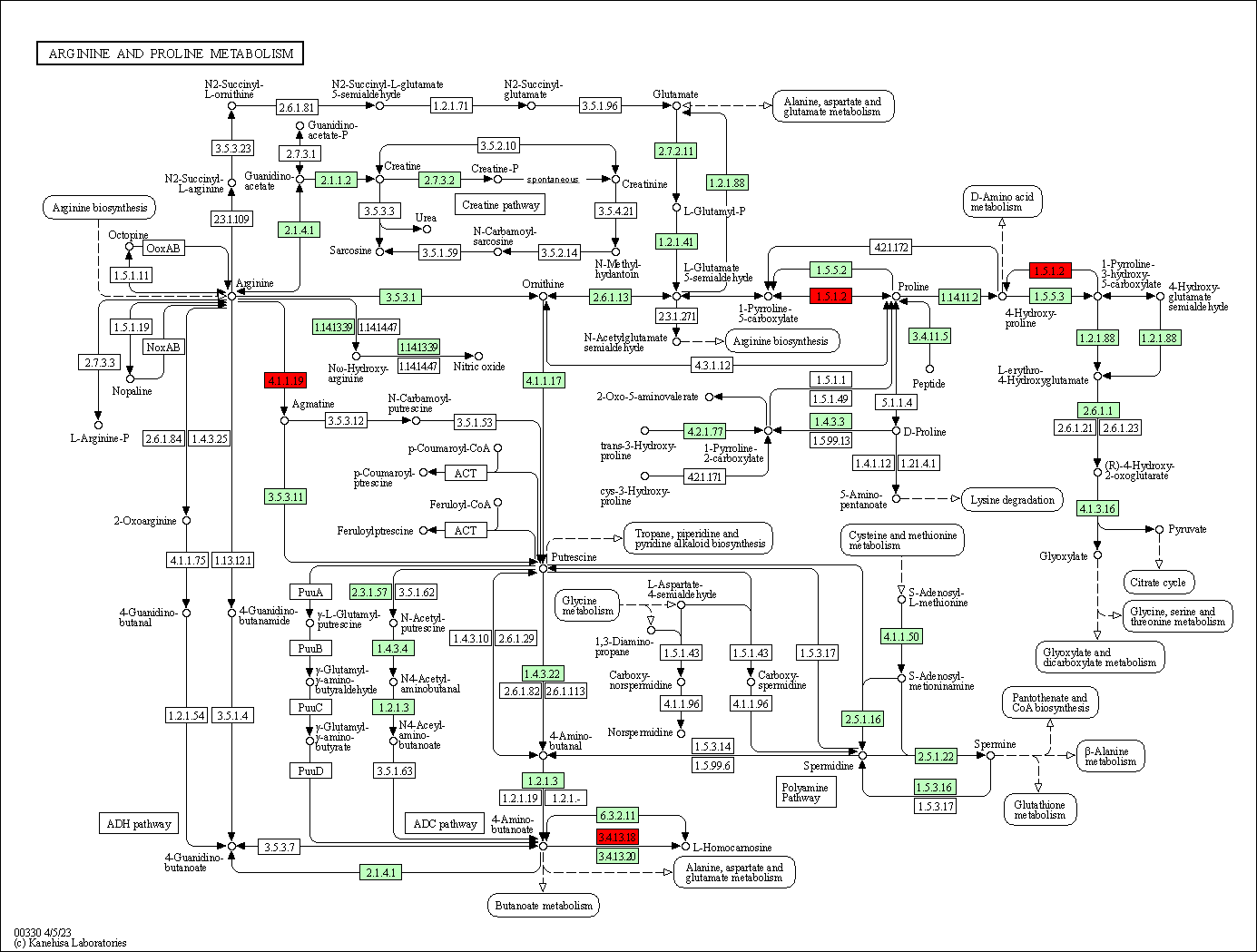
Fig.1: Arginine and Proline Metabolism in Covid-19 patients. The red are expressed only in Covid-19 patients
The red portions showed exclusively expressed in Covid-19 samples, thereby implicating that the agmatine may be used in treatment of Covid-19 patients. Other which may be used to treat include L-Homocamosine, 1-Pyrroline-3-hydroxy-5-carboxylate and Proline.
Chen-Song Zhang et. al (2022) found prominently elevated level of agmatine in the serum of Covid-19 patients by utilizing targeted tandem mass spectrometry. There are studies from Adina Turcu-Stiolica et. al. (2023), José Manuel Pérez de la Lastra et. al. (2023), Riccardo Calvani et. al. (2023), Ivana Đukić et. al (2023), Matteo Tosato et. al. (2022), Gaetano Santulli et. al. (2022), Raffaele Izzo et. al. (2022), Carolina Bologna et. al. (2022), Ayobami Adebayo et. al. (2021) and Giuseppe Fiorentino et. al. (2021) which confirms that arginine is beneficial as a supplementary for the treatment of Covid-19 patients. Ivonne Melano et. al (2021), also suggested that reduction of arginine-rich food intake can be considered as prophylactic and therapeutic regimens. There is also a result from Jananee Muralidharan et. al (2022) where arginine supplementation did not show any significant difference in outcomes when compared to placebo supplementation.
The levels of proline and hydroxyproline amino acids and the prolidase enzyme were found to be lower in Covid-19 patients compared to healthy groups, showing that the proline (Merve Ergin Tuncay et. al.(2022)), showing proline metabolic pathway was affected in COVID-19.
It is however not yet confirmed whether the action of arginine is due to the binding at the active sites of SARS-COV-2 proteases (Ramesh Thimmasandra Narayan, 2021) or binding at the active site of SARS-CoV-2 RNA-dependent RNA polymerase (Adithya Jayaprakashkamath et. al. (2023)) or by increasing NO synthesis (Guoyao Wu et. al. (2021)).
B: Lysine degradation pathway
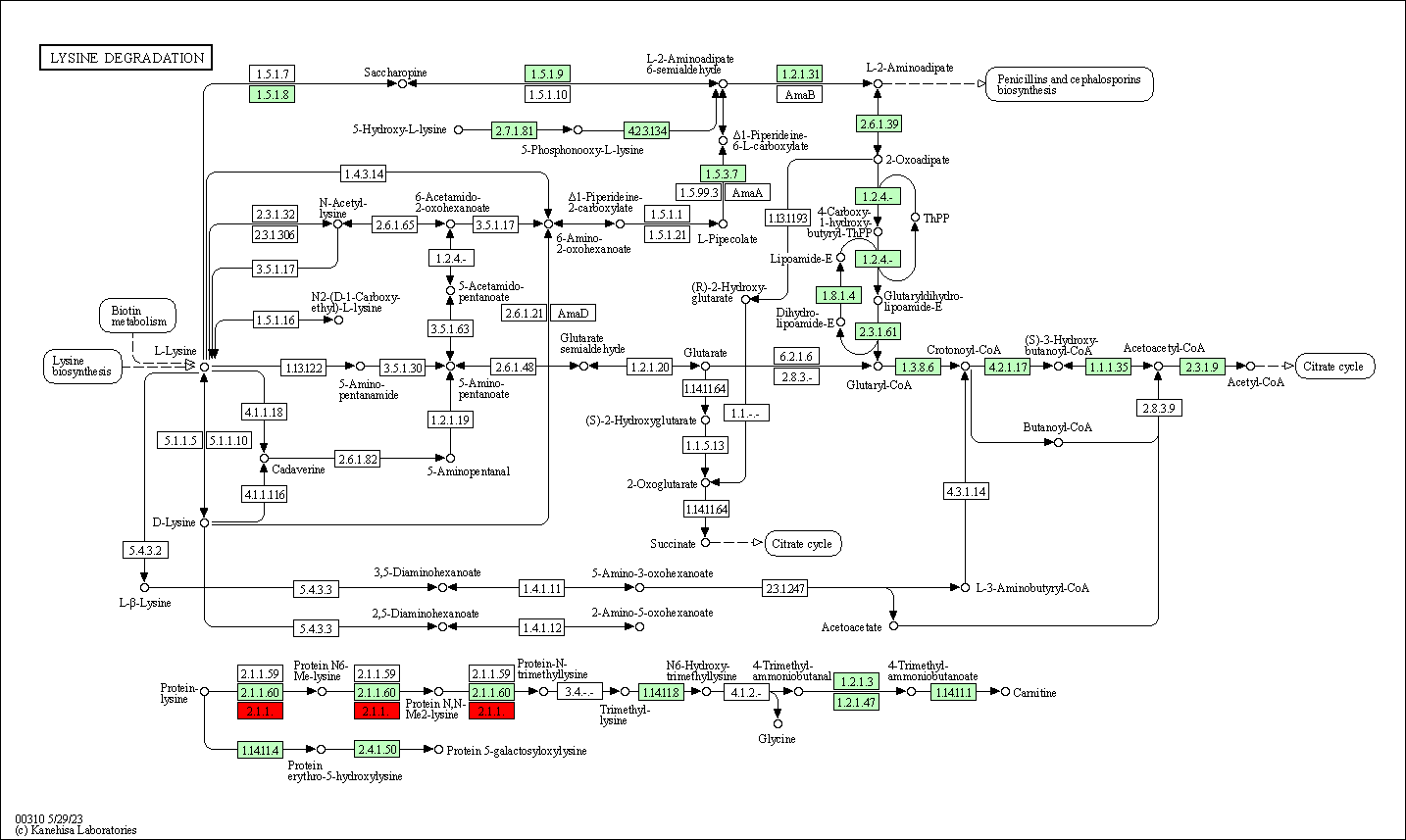
Fig 2: Lysine degradation in Covid-19 patients
Our result suggest that lysine degradation pathway can also be exploited. Lysine, Trimethyl-lysine and 4-trimethyl ammoniobutanal may also be beneficial to Covid-19 regimen.
The use of lysine is supported by Ivonne Melano et. al (2021), suggesting that lysine and its derivate can be considered as prophylactic and therapeutic regimens against coronavirus and influenza virus. Also Johannes Jungwirth et.al (2022) pointed an additive effect of the combination of D,L-Lysine-Acetylsalicylate and glycine and the antiviral acting drug remdesivir on SARS-CoV-2 replication in vitro.
Sedigheh Shams et. al. (2022) found that the lysine was significantly higher in Covid-19 children than controls and suggested reducing the consumption of arginine-rich foods and lysine supplementation which can play a prophylactic role against these viruses. Obesity is a major risk factor for COVID-19 severe complications and n6-acetyl-l-lysine was detected only among the COVID-19 cohort, exhibiting significantly higher levels in COVID-19 obese patients when compared to COVID-19 lean patients by Nour Jalaleddine et. al. (2022).
There is so far no publication regarding usage of Trimethyl-lysine and 4-trimethyl ammoniobutanal in Covid-19 treatment.
C: Calcium signaling pathway
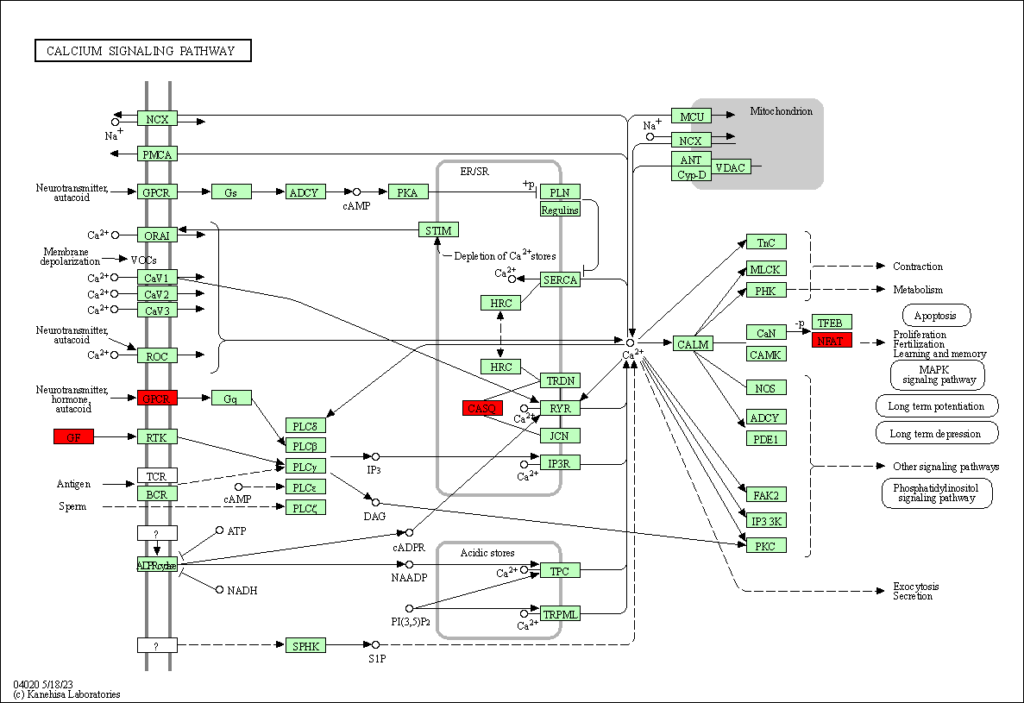
Fig.3: Calcium signalling pathways in Covid-19 patients
A reduced level of serum ionized calcium has been shown to be strongly positively associated with COVID-19 severity. Our result suggest that targets against cysteinyl leukotriene receptor 1 (cinalukast, ibudilast, montelukast, tipelukast, verlukast, zafirlukast), epidermal growth factor, calsequestrin 1 and nuclear factor of activated T cells 1 may be used as a Covid-19 regimen.
There is are several positive evidences of using montelukast in Covid-19 regiimen. Buğra Kerget et. al. (2022) showed that montelukast added to standard therapy had favorable effects on length of hospital stay, MAS, respiratory failure, and mortality. Bruce Chandler May et. al. (2021) showed that combination of levocetirizine, a third-generation antihistamine and montelukast appeared to offer a significant addition to the treatment of Covid-19, effectively mitigating symptoms without creating concurrent host toxicity. Similarly, Rasool Soltani et. al (2022) also showed that gabapentin, a cyclic gamma-aminobutyric acid in combination with montelukast, imporved cough frequency and severity in hospitalized patients with Covid-19. Ludwig Aigner et. al. (2020) also stated that montelukast might not only alleviate pathology but promote structural and functional recovery.
Treatment with zafirlukast, compared to placebo, did not significantly improve symptoms resolution (M Al Ghobain et. al. 2022). There is so far no publication available for other drugs cinalukast, ibudilast, tipelukast and verlukast in relation to Covid-19 treatment, which according to our analysis are also putative drugs to treat Covid-19 patient.
C: T-cell virus infection pathway
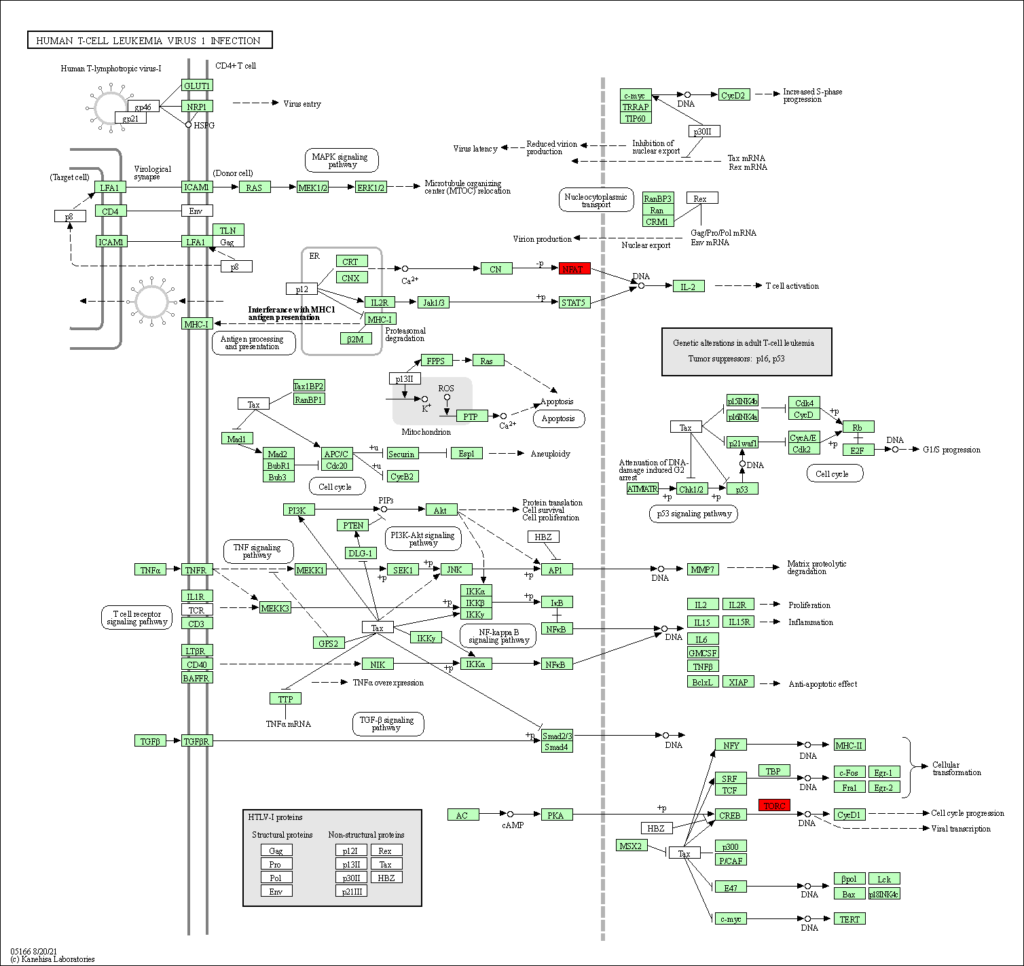
Our study also suggest, NFAT and TORC may be putative potential targets.